
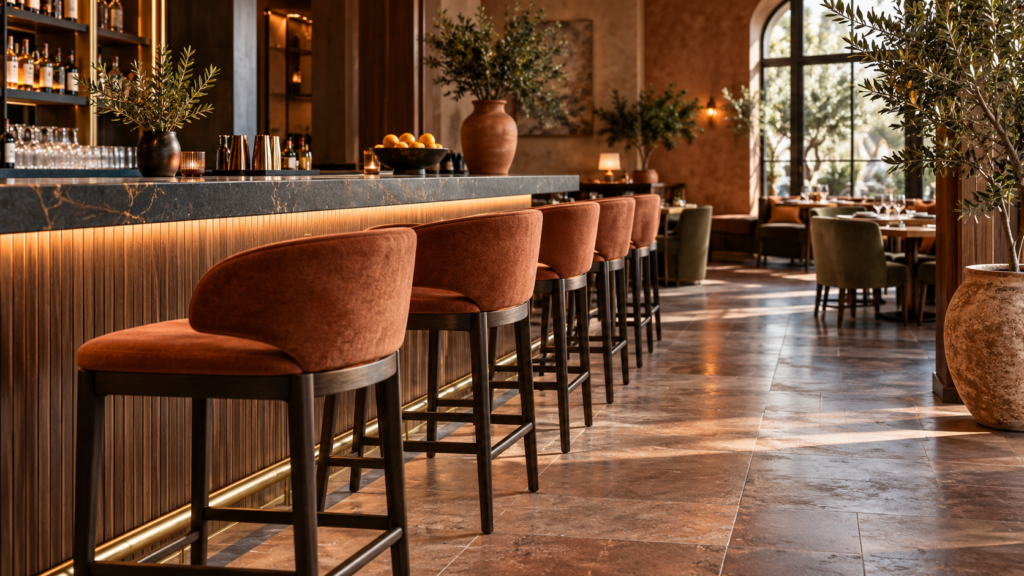
AI-generated design concept; not a completed client project photograph.
Restaurant bar stool selection starts with the counter height, guest comfort, and service flow. Test a stool with the actual counter before approving the quantity and finish.
Measure the counter
Measure the finished floor to the underside and top of the counter. Check any apron or structural supports that may affect knees. Compare the seat height with the counter and use a representative sample to confirm comfortable legroom for different guests.
Plan spacing and circulation
Arrange stools at the actual counter and allow space to sit down, leave, and move behind seated guests. Check nearby doors, service stations, and accessible routes with the project designer. A drawing alone may not reveal clashes with bags or footrests.
Compare design choices
| Feature | Potential benefit | Check |
|---|---|---|
| Backrest | Support for longer visits | Space and ease of cleaning |
| Footrest | More comfortable seated posture | Position and finish wear |
| Upholstered seat | Softer seating | Cleaning instructions and replacement |
Review construction
Inspect joints, frame finish, glides, and the way the footrest is attached. Test the sample on the restaurant’s actual floor. Ask the supplier about care, hardware adjustment, and replacement parts instead of assuming all finishes perform the same way.
Approve a sample
Have operators and staff test the stool at the finished counter. Record the approved seat height, upholstery, finish, and any modifications. Agree how variations and spare parts will be handled before production.
Illustrative example
A fictional café tests a stool at its bar and finds the counter apron limits knee room. The team selects a lower seat after checking comfort with several users. This example is fictional.
Plan the order
Custom furniture projects may take 15–45 days depending on design, materials, quantity, and approvals. Confirm the actual schedule with Simple Century.
Frequently asked questions
How do I choose a seat height?
Measure the finished counter and test a sample with enough clearance under its apron.
Should stools have backs?
Consider the expected length of stay, comfort, sightlines, and cleaning needs.
How many stools fit?
Test the arrangement at full scale with realistic circulation and applicable accessibility requirements.