
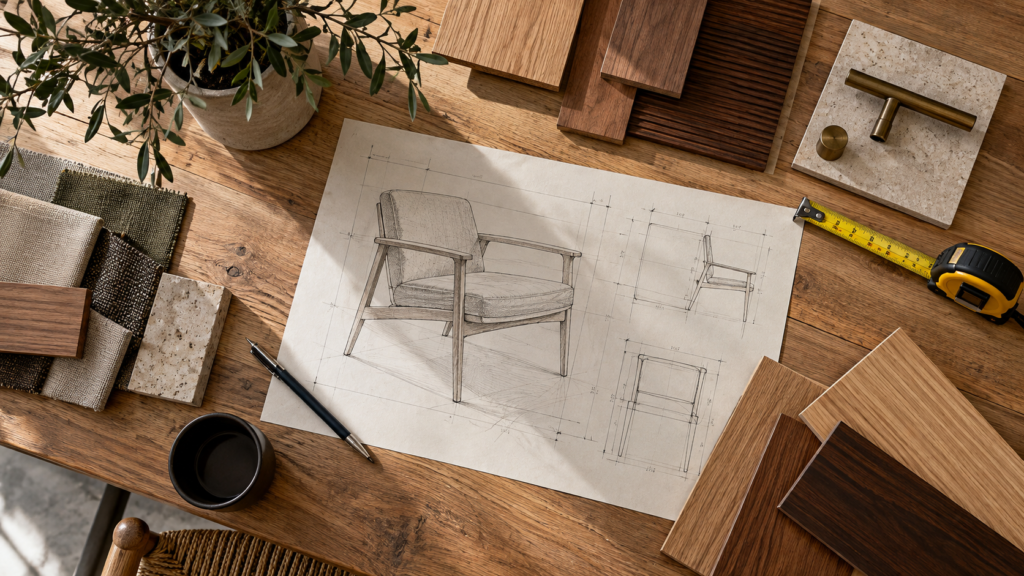
AI-generated design concept; not a completed client project photograph.
Furniture value engineering is a structured review of design, materials, construction, and logistics to meet a project’s priorities within its budget. Compare complete, documented options and approve changes before production.
Set priorities
List the functions that must be retained: fit, guest or staff use, maintenance access, appearance, delivery timing, and the project’s applicable requirements. Identify the items that are flexible and the people authorized to approve changes.
Compare the full scope
Request like-for-like quotations that identify quantities, dimensions, materials, finishes, hardware, packaging, delivery terms, and exclusions. A lower unit price may come with different specifications or services, so assess the whole scope.
Review alternatives
| Area | Possible review | Question for the supplier |
|---|---|---|
| Materials | Alternate finish or substrate | How does care or appearance change? |
| Dimensions | Standardized sizes | Does the revised item still fit? |
| Hardware | Different component | Are access and replacement supported? |
| Logistics | Packaging or delivery sequence | What site work is included? |
Approve samples and drawings
Review physical finish samples and a representative prototype when the change affects appearance or use. Record each revision, its cost impact, and the final approved specification. Confirm relevant project requirements with the responsible professionals.
Consider ongoing operation
Include cleaning, repairs, spare parts, and replacement in the discussion. A choice should make sense for the intended use and maintenance team, not simply reduce the initial quote.
Illustrative example
In a fictional hotel project, the team standardizes two cabinet widths after checking room layouts, reducing the number of variants while retaining required storage. This scenario is illustrative and does not report an actual cost saving.
Plan the schedule
Custom furniture may take 15–45 days depending on design, materials, quantity, and approvals. Confirm the project-specific schedule, including time for samples and revisions, with Simple Century.
Frequently asked questions
Does value engineering mean using cheaper materials?
It may involve different materials, but it can also change dimensions, construction, or logistics while preserving agreed priorities.
When should changes be reviewed?
Review options before final drawings and production approval so their effects can be evaluated.
What should be documented?
Record the original and revised specifications, cost and schedule effects, sample decisions, and approvals.