
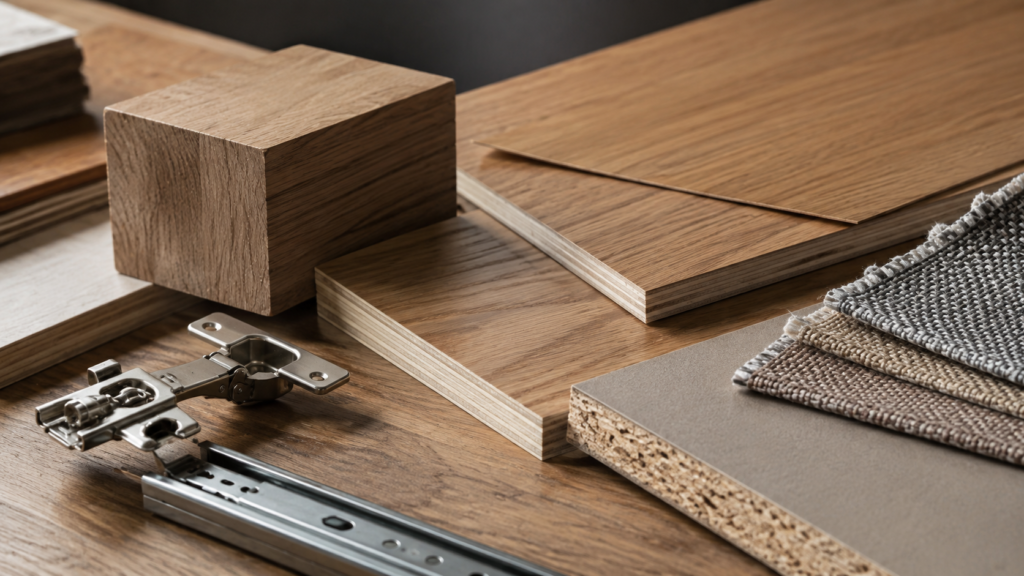
Specify commercial furniture as a complete construction, not just a visible finish. Identify the surface, underlying material, edge treatment, hardware, and maintenance requirements. Then request samples and evidence relevant to the intended use. Two pieces that look similar in a photograph may differ in construction, repair options, and suitability for daily operation.
AI-generated material illustration, not a technical cross-section or evidence of a supplied product. Confirm actual construction through specifications and physical samples.
How do solid wood, veneer, and laminate differ?
Solid wood uses timber through the specified component. Veneer uses a thin layer of real wood over another material. Laminate is a manufactured surface used in different product systems; the exact type and the underlying construction should be identified in the specification.
These categories describe materials, not a complete quality ranking. A product’s design, manufacturing, installation, and maintenance also matter. Select materials according to the application and ask the supplier to document what is actually proposed.
| Option | What the name tells you | What still needs confirmation |
|---|---|---|
| Solid wood | The specified component is timber | Species, construction, finish, and care instructions |
| Wood veneer | A real-wood surface layer is used | Substrate, veneer arrangement, edges, and coating |
| Laminate surface | A manufactured decorative surface is used | Product type, grade, substrate, bonding, and edges |
| Upholstered assembly | Fabric or another covering is applied | Covering reference, filling, support, seams, and maintenance |
| Coated metal | Metal receives a surface treatment | Metal specification, coating system, joints, and intended environment |
Avoid treating a photograph or a broad label such as “commercial grade” as a full specification. Ask what measurable requirements and supporting documents sit behind the label.
Why do edges and concealed surfaces deserve attention?
Edges, joints, and concealed surfaces help determine how a piece is assembled and maintained. A desktop sample may show the face finish without revealing the edge construction. A wardrobe image may show the doors without identifying the back panel, shelf supports, or internal finish.
Ask for a sample that includes the relevant edge and corner, or a drawing that explains the build. Review exposed fasteners, access panels, and connections. For surfaces near drinks or cleaning activity, request the supplier’s care instructions and the limitations of the proposed assembly.
Apply the same approach to metal furniture. The appearance of a coating does not establish its suitability for a particular indoor or outdoor location. Specify the actual environment and obtain a proposal for that use.
What should buyers ask about upholstery?
Start with how the furniture will be used. A hotel lounge, a meeting chair, and a guest room headboard present different contact patterns and cleaning requirements. Give the supplier a description of the application rather than requesting a generic “heavy-duty fabric.”
Ask for the exact covering reference, care instructions, and relevant performance documentation. Where a test result is supplied, check the test method and the product tested. Do not assume results from different methods can be compared directly or that a covering test establishes the performance of the entire upholstered piece.
Review seams, access for repair, and whether cushions or covers can be replaced. Involve the operator’s cleaning team before selecting a finish that depends on an unfamiliar maintenance process.
How should finish samples be approved?
Label samples with the product reference, supplier, date, and approval status. Where natural variation matters, discuss an acceptable range rather than approving only one unusually uniform piece.
View related samples together under lighting relevant to the project. Record the approved combination and retain a reference sample for inspection. A digital photograph should support that record, not serve as the sole color standard.
If the supplier proposes a substitute, request a clear explanation of what changes. Review appearance, construction, maintenance, cost, and schedule effects before authorizing it.
What belongs in the final material specification?
Create one entry for each item or finish family. Include the visible material, substrate where applicable, edge treatment, hardware references, color or sample code, intended environment, maintenance requirements, and agreed evidence. Connect this entry to the approved drawing revision.
Keep the material schedule with the purchase records. It gives the inspection team a defined reference and helps future buyers identify what to request when replacing a component. Archived information supports reorders, although continued availability and an exact visual match still need confirmation.
Example brief: coordinating finishes for a boutique hotel
Fictional project scenario for illustration.
In a fictional boutique hotel brief, the lobby and guest rooms share a warm wood appearance, but the furniture has different uses. The designer requests separate construction descriptions for the reception counter, bedside tables, and wardrobe doors, then reviews the finish samples together. The purpose is visual consistency with an application-specific specification, not an assumption that every item needs the same material.
Frequently asked questions
Is veneer the same as laminate?
No. Veneer uses a thin real-wood layer; laminate is a manufactured surface. Both require further specification of the complete furniture assembly.
Can I confirm furniture materials from a render?
No. Use a written specification, physical samples, and relevant supplier documentation. A render communicates visual intent.
Does a good surface finish prove the furniture is suitable?
No. Review construction, hardware, intended use, maintenance, and any required performance evidence as well as appearance.
Prepare a material brief for your project
Explore Simple Century’s furniture range and share your material requirements. Include the location of use, cleaning routine, finish direction, and project specification so that proposed options can be reviewed against a clear brief.
Simple Century’s stated lead-time range is 15–45 days, depending on the project. Ask for a project-specific schedule and confirmation of whether transport and installation are included.