
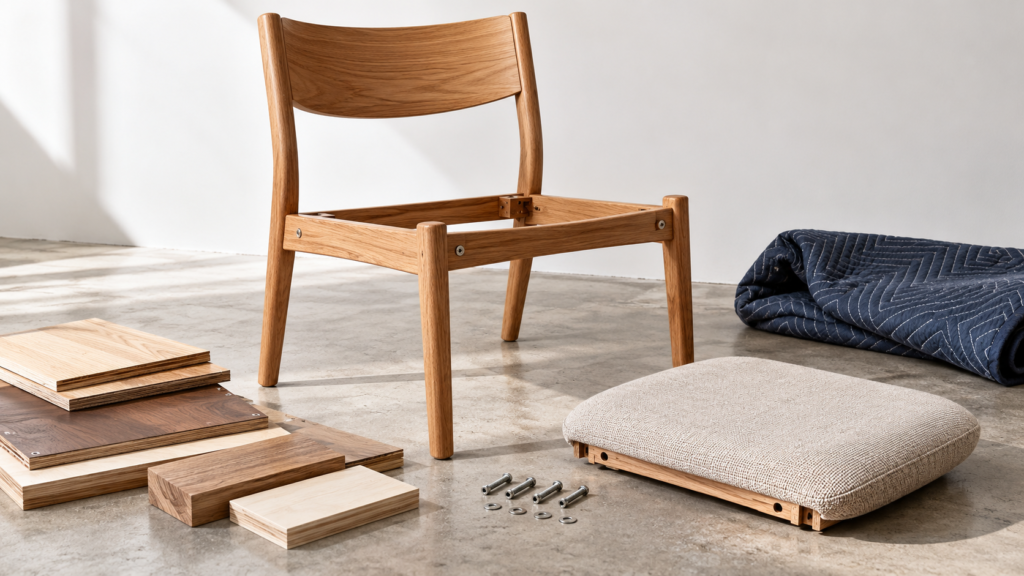
AI-generated material illustration; confirm actual products through specifications and physical samples.
Start with verifiable requirements
Sustainable furniture specification should describe decisions that a buyer can review: material composition, repair access, expected use, maintenance, packaging, replacement parts, and end-of-life considerations. Avoid relying on broad environmental language without asking what the claim covers.
What should be documented?
Record visible materials, substrates, coatings, adhesives where relevant, hardware, upholstery, packaging approach, care instructions, and replacement options. Ask the supplier to distinguish product information from assumptions about the whole project.
| Topic | Buyer question |
|---|---|
| Materials | What is each component made from? |
| Durability | What use and maintenance conditions were considered? |
| Repair | Can covers, hardware, or panels be replaced? |
| Packaging | How is damage prevented and waste managed? |
| Reorder | Can specifications and finish references be retained? |
Design for a longer service life
Repairable joints, replaceable hardware, accessible fixings, and documented finishes can reduce unnecessary replacement. Durability still depends on the intended use and care routine, so specify the operating environment rather than using a generic “heavy-duty” label.
Compare claims carefully
Ask which product or component a document refers to, what date applies, and what limitations remain. Keep the evidence with the approved drawing and material schedule. Do not present an unverified claim as a certification or guarantee.
Fictional planning example
Fictional scenario for illustration, not a completed client project. An office buyer prioritizes replaceable task-chair components and retained finish references, then compares packaging and delivery assumptions across suppliers.
Frequently asked questions
Is one material always more sustainable?
Not automatically. Use, durability, maintenance, repairability, transport, and documented composition all affect the decision.
What should happen when a supplier changes a material?
Request a documented substitute and review appearance, performance, care, cost, and schedule before approval.
Prepare an evidence-based brief
Explore Simple Century’s furniture offering and send your specification questions. Confirm a project-specific schedule within the stated 15–45-day range, depending on scope and approvals.