
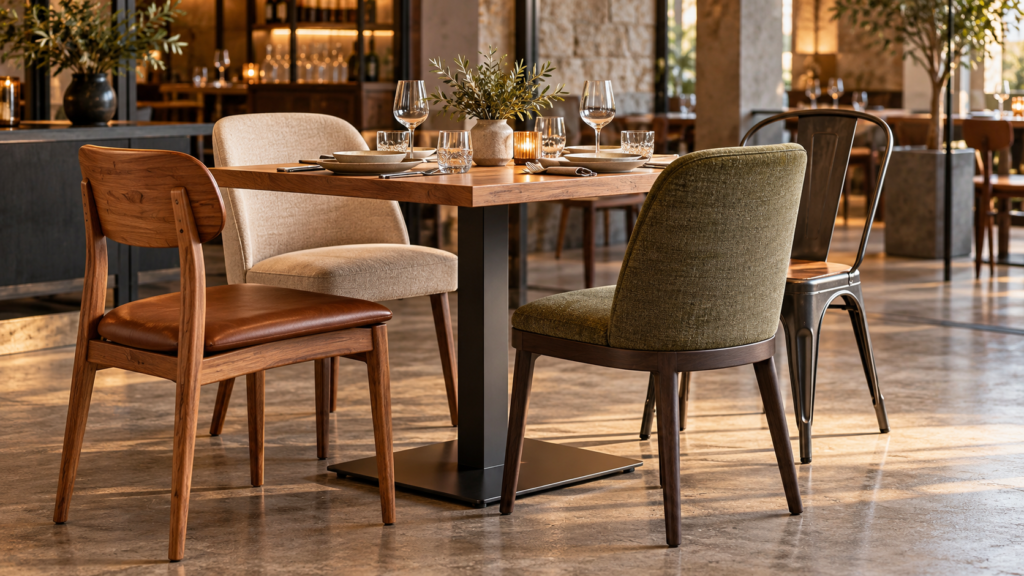
AI-generated design concept for this article, not a completed client project photograph.
How should buyers choose restaurant chairs?
Choose restaurant chairs as part of the complete dining layout. Compare comfort, fit under the selected table, construction, cleaning needs, and the way staff move and store the chairs. A visually attractive chair still needs to work in daily service.
Check the chair with its table
Review the seat height, arm clearance, table apron, base position, and space for guests to sit down and leave. Use the proposed chair and table together in a sample layout rather than relying on separate catalog dimensions.
| Decision | Check before ordering |
|---|---|
| Comfort | Seat shape, support, and expected dining duration |
| Fit | Clearance under the chosen table and around guests |
| Construction | Frame, joints, glides, and intended use |
| Finish | Cleaning method and appearance under restaurant lighting |
| Operations | Weight, movement, stacking, and storage if needed |
Compare frame and upholstery choices
Timber, metal, and upholstered designs each need a complete specification. Identify frame finish, fabric or covering reference, seams, glides, and care instructions. Ask the supplier to explain how the proposed construction supports the intended commercial use; do not assume that appearance alone establishes performance.
Test service and maintenance
Move a sample as staff would during cleaning and service. Inspect the underside, joints, and floor-contact points. If stacking is required, confirm that the exact model is intended for stacking and agree the storage method and quantity.
Approve the sample
Review finish samples and a representative chair with the actual table. Record dimensions, approved materials, item codes, and any changes in the order schedule. Identify who will receive, assemble, inspect, and maintain the chairs.
Fictional planning example
Illustrative scenario only. A 60-seat restaurant compares two chair styles. The wider armchair works at perimeter tables, while a slimmer armless chair offers better access in the central dining area. The buyer records both chair types in the seating plan.
Frequently asked questions
Is an upholstered chair always better for comfort?
Not necessarily. Seat shape, support, covering, and intended dining time should all be assessed with a sample.
Can chairs be mixed within one restaurant?
Yes, when each style fits its table and the layout maintains a coordinated appearance and practical circulation.
What should be included in a request for quotation?
Provide quantities, layout, table details, finish references, intended use, delivery destination, and assembly requirements.
Prepare a dining furniture schedule
See furniture options or discuss your restaurant brief. Lead time is typically discussed within a 15–45 day range depending on the project; confirm the exact schedule and scope.