
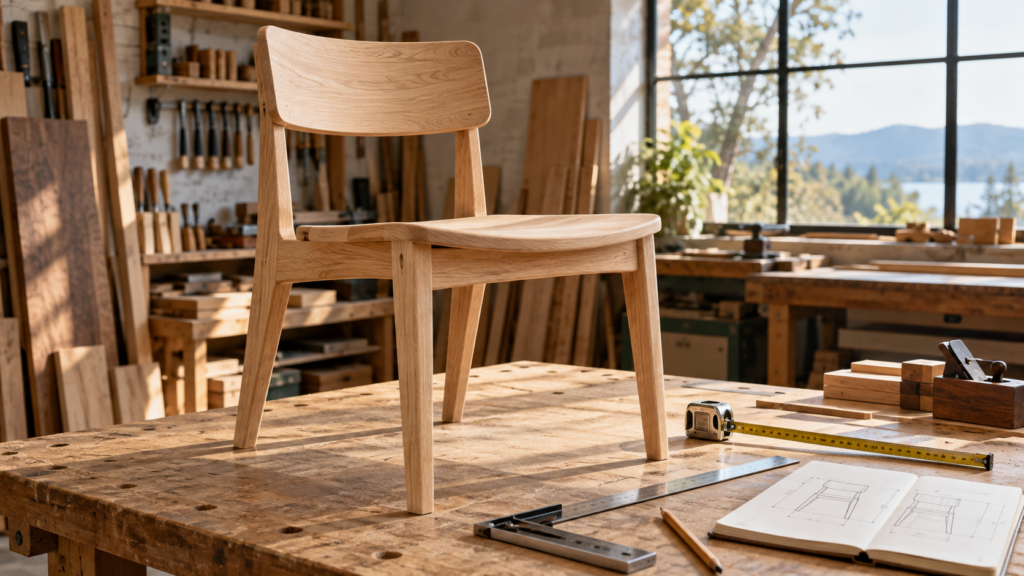
A commercial furniture prototype helps buyers evaluate form, dimensions, finish, and construction before committing to repeat production. Agree in advance what the prototype represents and which decisions it will support.
Define the review scope
Identify the product, intended use, quantity, and the features to evaluate. A visual prototype may not include final hardware or materials; a production sample should more closely reflect the approved specification. Ask the supplier to identify any differences in writing.
Check fit and function
Measure overall dimensions and usable clearances against the approved drawings. Open doors, test drawers, check seating comfort, and place the item in a representative layout. Involve the people who will operate, clean, and maintain it.
Review finish and construction
Compare the prototype with approved material samples under the intended lighting. Inspect edges, joints, alignment, fasteners, and accessible surfaces. Confirm the cleaning instructions and the availability of replacement components where relevant.
| Review item | Record before approval |
|---|---|
| Dimensions | Measured values and agreed tolerances |
| Function | Door, drawer, or seating adjustments |
| Finish | Sample reference and visible variations |
| Maintenance | Access points and replacement process |
Record decisions
Photograph issues, describe requested changes, and identify who will approve the revised drawings. Clarify whether a second sample is needed. Keep the final approved sample and written specification available for comparison during production.
Illustrative example
In a fictional office project, a chair prototype fits the table but is awkward to move on the intended flooring. The team tests an alternative glide and documents the approved change. The scenario is illustrative, not a completed client case.
Plan the schedule
Custom projects may take 15–45 days depending on the design, quantity, materials, sample revisions, and approvals. Confirm the actual timing with the supplier; prototype changes can affect the schedule. Share drawings and quantities with Simple Century.
Frequently asked questions
Is every prototype production-ready?
Not necessarily. Ask which materials, hardware, and construction details match the intended production version.
Who should review the sample?
Include the buyer, designer, operator, and maintenance team as appropriate for the product.
What happens after approval?
Document the final specification, resolve outstanding changes, and agree the production and delivery schedule.